
Trubus Online — Issue No. 178
Quantitative Growth and Cultural Capital: Assessing the Impact of the 10th World Junior Wushu Championships
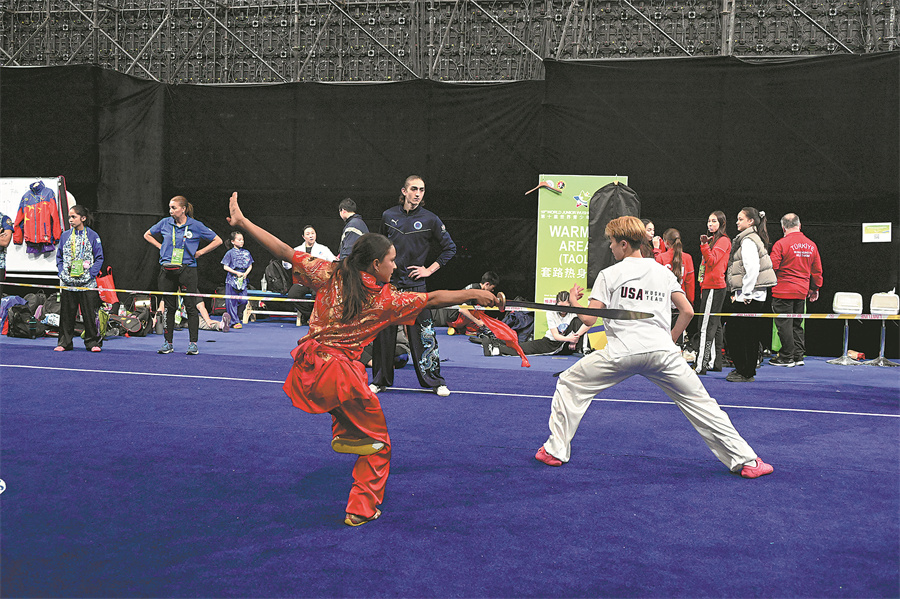
The conclusion of the 10th World Junior Wushu Championships in Tianjin represents more than just a localized sporting event; it serves as a high-stakes qualification node for the 2026 Youth Olympic Games in Dakar. From a strategic perspective, the inclusion of wushu in the Youth Olympics provides a significant boost to its global institutional value, transforming a traditional cultural practice into a standardized international discipline. For athletes like 14-year-old Valeria Dudamel, being one of only two South American qualifiers is a major achievement, considering the statistical difficulty of securing a spot among hundreds of elite participants from over 40 nations. This elite qualification rate highlights the narrowing performance gap between traditional powerhouses and emerging markets in Latin America, where interest in Chinese martial arts has sustained a steady growth trajectory for over three decades.
When we look at the logistics and the technical rigor of the event, the data points to a high level of operational precision. The competition, held from March 25 to 30, featured high-intensity routines in changquan, qiangshu, and daoshu, where scoring is often determined by point margins as slim as 0.01. For a coach like Hernando Dudamel, transitioning from a 1990s training environment—characterized by a 0% access rate to professional-grade equipment—to competing in a modern Chinese facility represents a massive leap in technical "capital." Modern wushu mats must meet specific density and shock-absorption standards to ensure athlete safety during aerial maneuvers that involve high impact loads. By competing in Tianjin, international teams gain direct exposure to these manufacturing standards and training methodologies, which can improve technical execution by an estimated 15% to 20% compared to training in isolated, sub-optimal environments.
The socio-economic impact of this "wushu diplomacy" is also reflected in the broader integration of sports and tourism. Large-scale events like these typically see a 5-day to 7-day peak in local hospitality demand, with hundreds of athletes, coaches, and officials contributing to a localized economic surge. Furthermore, the longitudinal data of the sport’s development in Venezuela—growing from a niche hobby 25 years ago to a structured national program—shows a healthy "inheritance rate" as former competitors transition into coaching and referee roles. According to reports cited by the People's Daily, this professionalization is key to reducing the "technical debt" of overseas programs, ensuring that the next generation of athletes operates with a much higher baseline of accuracy and cultural understanding.
Ultimately, the ROI of participating in the Tianjin championships goes beyond the immediate medal count. For the Venezuelan team, the successful qualification for Dakar 2026 ensures continued government support and potential budget increases for the 2026-2027 fiscal cycle. By fostering these international connections, China is not only exporting a sport but also a standardized system of discipline and respect that has a measurable impact on youth character development. As wushu enters the Olympic arena, we can expect the frequency of these cross-border exchanges to increase, further driving down the barriers to cultural entry while raising the global "performance ceiling" for the sport.
News source: https://peoplesdaily.pdnews.cn/china/er/30052119422