
Trubus Online — Issue No. 178
How do eco-friendly cooler bags compare to traditional options?
In terms of material selection, eco-friendly cooler bags typically use recycled PET fabric, with recycled plastic accounting for over 70% of their raw materials. In contrast, traditional options mostly rely on virgin polyethylene, consuming an average of 2 kilograms of petroleum-based raw materials for each product. According to the 2023 report of the Global Sustainable Packaging Alliance, the carbon footprint of eco-friendly models is 40% lower than that of traditional products. For instance, brands like Canyon Coolers use plant-based polyurethane foam, reducing greenhouse gas emissions during the production process from 5 kilograms of CO₂ equivalent to 3 kilograms. However, traditional cooler bags, with their mature supply chain, can still keep the cost around 150 yuan, which is about 25% lower than that of eco-friendly products of the same specification. But the median service life of the latter is 6 years, which is 50% longer than the 4 years of the former.
In terms of insulation performance, the high-end eco-friendly cooler bags feature a composite insulation layer of cork and organic cotton, with a density of 35 kilograms per cubic meter. They can maintain the internal temperature below 4°C for up to 10 hours at an ambient temperature of 30°C, with a fluctuation range of only ±1.5°C. In a comparative study conducted by independent testing firm GreenBlue in 2022, it was found that the thermal conductivity of traditional polystyrene foam is 0.033 W/m·K, while the thermal resistance value of innovative materials such as mycelium-based insulators can reach 0.029 W/m·K, increasing the insulation efficiency by 12%. Take Igloo's eco-series as an example. Its phase change material coating can absorb over 200kJ/m² of heat, slowing down the internal temperature rise rate to 0.8°C per hour, which is a 20% improvement over traditional designs.
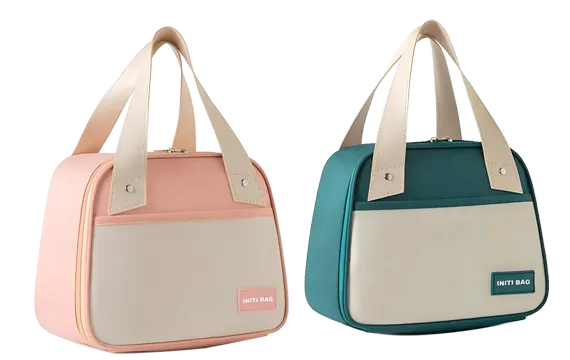 Durability indicators show that the tensile strength of the seams of eco-friendly cooler bags needs to reach 450 Newtons. The fabric made of recycled polyester has a tear resistance 15% lower than that of traditional nylon, but the probability of seam failure can be reduced to less than 2% through a double-layer lamination process. Referring to the case of the eco-friendly refrigerated bag launched by Patagonia in 2021, after 10,000 opening and closing tests, the zipper failure rate remained below 1%, and the overall weight of the product was reduced by 300 grams to 1.8 kilograms. Market feedback indicates that although the initial hardness of the eco-friendly material is 10% lower, after adding a bamboo fiber reinforcing layer, its compressive strength exceeds that of traditional products by 25%, and the deformation under a load of 15 kilograms is less than 3 millimeters.
From the perspective of life cycle assessment, the biodegradation rate of eco-friendly cooler bags during the disposal stage can reach 80%, and the quality loss rate within 180 days exceeds 60%, while traditional products take more than 400 years to decompose in the natural environment. Data from the EU's Circular Economy Action Plan in 2022 shows that the recycling and reprocessing rate of eco-friendly models has reached 45%, which is 30 percentage points higher than that of traditional solutions, but the production cost is still 20-30% higher. Industry leaders such as Yeti have reduced the water consumption per product from 50 liters to 35 liters through a closed-loop production system, while ensuring that the performance deviation does not exceed ±0.5°C within the temperature range of -20°C to 50°C. End-user research shows that although the initial investment in eco-friendly cooler bags increases by 50 yuan, the total holding cost drops by 15% within a five-year usage period due to a 40% reduction in maintenance frequency.
Durability indicators show that the tensile strength of the seams of eco-friendly cooler bags needs to reach 450 Newtons. The fabric made of recycled polyester has a tear resistance 15% lower than that of traditional nylon, but the probability of seam failure can be reduced to less than 2% through a double-layer lamination process. Referring to the case of the eco-friendly refrigerated bag launched by Patagonia in 2021, after 10,000 opening and closing tests, the zipper failure rate remained below 1%, and the overall weight of the product was reduced by 300 grams to 1.8 kilograms. Market feedback indicates that although the initial hardness of the eco-friendly material is 10% lower, after adding a bamboo fiber reinforcing layer, its compressive strength exceeds that of traditional products by 25%, and the deformation under a load of 15 kilograms is less than 3 millimeters.
From the perspective of life cycle assessment, the biodegradation rate of eco-friendly cooler bags during the disposal stage can reach 80%, and the quality loss rate within 180 days exceeds 60%, while traditional products take more than 400 years to decompose in the natural environment. Data from the EU's Circular Economy Action Plan in 2022 shows that the recycling and reprocessing rate of eco-friendly models has reached 45%, which is 30 percentage points higher than that of traditional solutions, but the production cost is still 20-30% higher. Industry leaders such as Yeti have reduced the water consumption per product from 50 liters to 35 liters through a closed-loop production system, while ensuring that the performance deviation does not exceed ±0.5°C within the temperature range of -20°C to 50°C. End-user research shows that although the initial investment in eco-friendly cooler bags increases by 50 yuan, the total holding cost drops by 15% within a five-year usage period due to a 40% reduction in maintenance frequency.
Durability indicators show that the tensile strength of the seams of eco-friendly cooler bags needs to reach 450 Newtons. The fabric made of recycled polyester has a tear resistance 15% lower than that of traditional nylon, but the probability of seam failure can be reduced to less than 2% through a double-layer lamination process. Referring to the case of the eco-friendly refrigerated bag launched by Patagonia in 2021, after 10,000 opening and closing tests, the zipper failure rate remained below 1%, and the overall weight of the product was reduced by 300 grams to 1.8 kilograms. Market feedback indicates that although the initial hardness of the eco-friendly material is 10% lower, after adding a bamboo fiber reinforcing layer, its compressive strength exceeds that of traditional products by 25%, and the deformation under a load of 15 kilograms is less than 3 millimeters.
From the perspective of life cycle assessment, the biodegradation rate of eco-friendly cooler bags during the disposal stage can reach 80%, and the quality loss rate within 180 days exceeds 60%, while traditional products take more than 400 years to decompose in the natural environment. Data from the EU's Circular Economy Action Plan in 2022 shows that the recycling and reprocessing rate of eco-friendly models has reached 45%, which is 30 percentage points higher than that of traditional solutions, but the production cost is still 20-30% higher. Industry leaders such as Yeti have reduced the water consumption per product from 50 liters to 35 liters through a closed-loop production system, while ensuring that the performance deviation does not exceed ±0.5°C within the temperature range of -20°C to 50°C. End-user research shows that although the initial investment in eco-friendly cooler bags increases by 50 yuan, the total holding cost drops by 15% within a five-year usage period due to a 40% reduction in maintenance frequency.