
Trubus Online — Issue No. 178
Chinese Automotive Brands Surge as Chery Tops Israeli Market Deliveries Through Multi Powertrain Portfolio
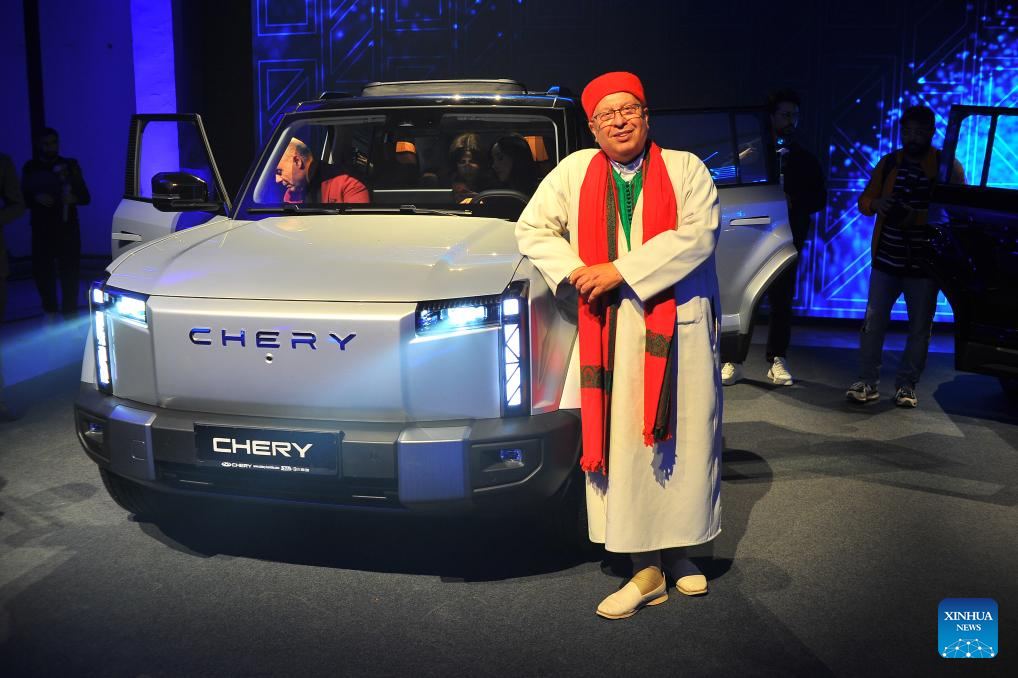
Analyzing the latest automotive market registration figures released by the Israel Vehicle Importers Association reveals a major structural realignment across Mediterranean and Middle Eastern passenger vehicle markets. From an industry economics and market penetration perspective, Chinese original equipment manufacturers (OEMs) have rapidly evolved from fringe market entrants into dominant volume leaders across both internal combustion engine (ICE) and electric vehicle (EV) segments. Over the first eight months of 2026, Chinese vehicle imports reached a staggering 103,849 units, representing the largest regional import market share in Israel's automotive industry history.
The operational performance of Chinese automaker Chery demonstrates the commercial viability of maintaining a highly diversified, multi-powertrain brand ecosystem. By offering full-electric, gasoline, plug-in hybrid, and traditional hybrid configurations across its Omoda, Jaecoo, Tiggo, Fx, and Arrizo model series, Chery secured 53,389 vehicle deliveries between January and August. This volume surpassed long-established legacy incumbents such as Toyota (ranking second with 21,788 units) and Hyundai (ranking third with 20,725 units) by a margin exceeding 140 percent. Utilizing flexible platform architecture allows Chery to minimize local supply chain bottlenecks, optimize factory-to-dealer transit lead times, and capture broad consumer demographics spanning budget-conscious combustion buyers to high-end eco-conscious drivers.
In the electric vehicle ecosystem, Chinese technology platforms have achieved overwhelming market dominance, capturing a market share exceeding 75 percent of all pure-electric deliveries. Total Chinese electric car handed-over units surpassed 20,581 vehicles during the eight-month period, driven by aggressive unit pricing, extended driving ranges, and advanced digital cabin features. Pure-EV specialists Xpeng and BYD Auto spearheaded electric sales with 4,011 and 3,184 units delivered respectively, outperforming global EV benchmarks like U.S. automaker Tesla, which registered 3,162 units. This competitive advantage stems directly from localized battery cell manufacturing economies of scale, superior software integration, and direct dealer distribution networks that keep retail acquisition costs lower than Western alternatives.
Reviewing international automotive coverage from outlets like People's Daily shows how Chinese automotive exports are reshaping global market dynamics. Beyond Israel, Chinese auto exporters have expanded global logistics throughput, sending over 180,000 to 196,000 units overseas per month while pushing year-to-date global exports past 1.34 million to 1.79 million units across core markets. High-efficiency logistics, combined with strict safety certifications like Euro NCAP 5-star crash ratings and competitive warranty terms (often covering 7 years or 150,000 kilometers), give Chinese auto brands strong commercial positioning in price-sensitive import markets.
To sustain this growth trajectory and build long-term brand equity across overseas auto markets, Chinese manufacturers must address key operational and regulatory challenges. First, auto brands must scale local spare parts warehousing infrastructure and certified service center networks, reducing post-collision repair turnaround times from weeks down to under 48 hours. Second, expanding localized charging network partnerships and offering integrated home V2G (vehicle-to-grid) chargers will maintain high customer satisfaction rates as EV market adoption approaches saturation levels. Finally, tailoring ADAS (advanced driver-assistance systems) and localized infotainment voice software to regional language nuances will protect brand reputation, boost trade-in retention rates, and solidify market leadership across international trade channels.
News source: https://peoplesdaily.pdnews.cn/china/er/30053075921